

Helen's story
I was born on February 11, 1905 at Clackforbie New Blyth in Scotland but spent my childhood and school days in at a place called New Deer. I spent three years in the higher grade at school where I learned French, English, and mathematics, science and two years of Latin. My favourite subject was English and I was an avid reader. My weakest subject was drawing. The highlight of my school days was prize giving day when we were all attired in our Sunday best and the district gentry came along. The laird presented the prizes which consisted of money bequeathed by some past resident: 5 pound for first prize, and 4.10s for second. I came second two years running. (Image below Helen aged 18 years).
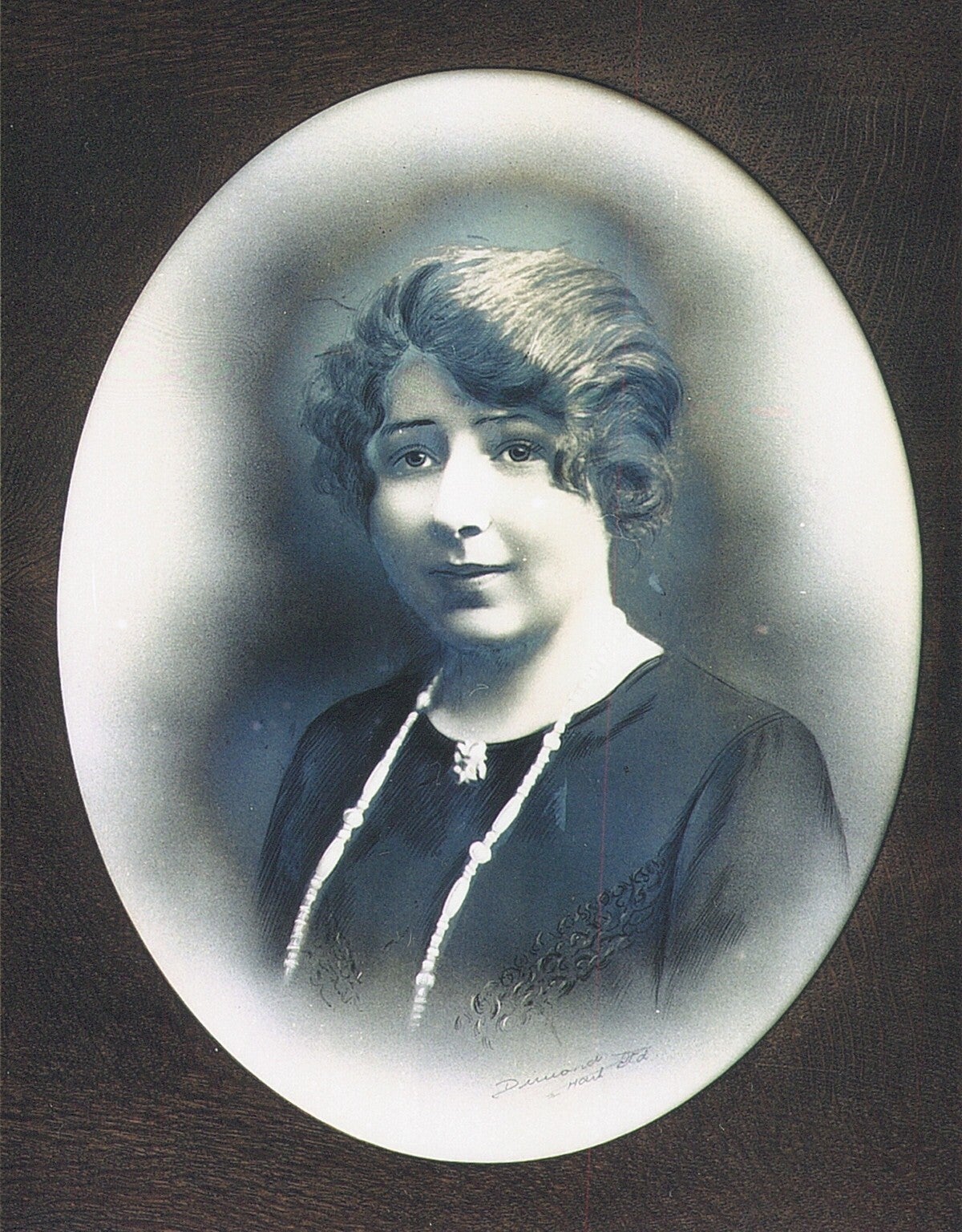
My mother suffered with asthma and I can remember when we walked to a farm to get cheese, she would have to rest many times to be able to breathe. We lived in a house where our neighbours were just a wall away and my special friend Mary Milne lived there. I was an only child and so I spent a lot of time playing with her. Mary's aunt who had been a governess bought up Mary and her sister Ruth and brother Irvine after their mother died. We all attended the Presbyterian Sunday School. It was a sad day for me when the Milne family moved to Aberdeen. (Mary went on to get an MA at Aberdeen University and wrote regularly to Helen).
My mother died of dropsey when I was 10 and then we had a housekeeper until she died. My father (Helen's uncle Alexander who had adopted her ) married again two years later.
I attended a Business College for typing and shorthand but found wages did not cover board, train fare from Dundee to Perthshire where we now lived, so i got a job as a domestic to three old maids. When one died they couldn't afford to keep me so I travelled to Weybridge in Surrey to be a cook for their niece. I stayed there until I emigrated to New Zealand.
I applied for a job as a cook for major and Mrs Robert Wilson who were on their honeymoon in England. I was interviewed by Mrs Wilson's sister in a smart club in London. I met major Wilson on the Corinthic (the ship I travelled to Wellington, New Zealand on). He had come to be introduced to me and I travelled to Marton by train the next day (Helen was 20 years old at this point). I was met by the chauffeur Mr Hinkley at Lethenty in Bulls where I was to work.
I arrived while there was a polio epidemic in New Zealand and there were travel restrictions between the North and South islands. Mrs Wilson had her first baby in Christchurch and could not travel to Marton for three months so I spent this time as cook for Sir James and Lady Wilson . I was very happy there and was made welcome and various homes in Bulls. When Mrs Wilson returned I had to go to Marton to cook there and I was sad to leave Bulls.
Mrs Wilson had a Karitane nurse for baby Hillary and later they got a housemaid, Mary Czespanski, who introduced me to Benno at a dance at Marton Junction.
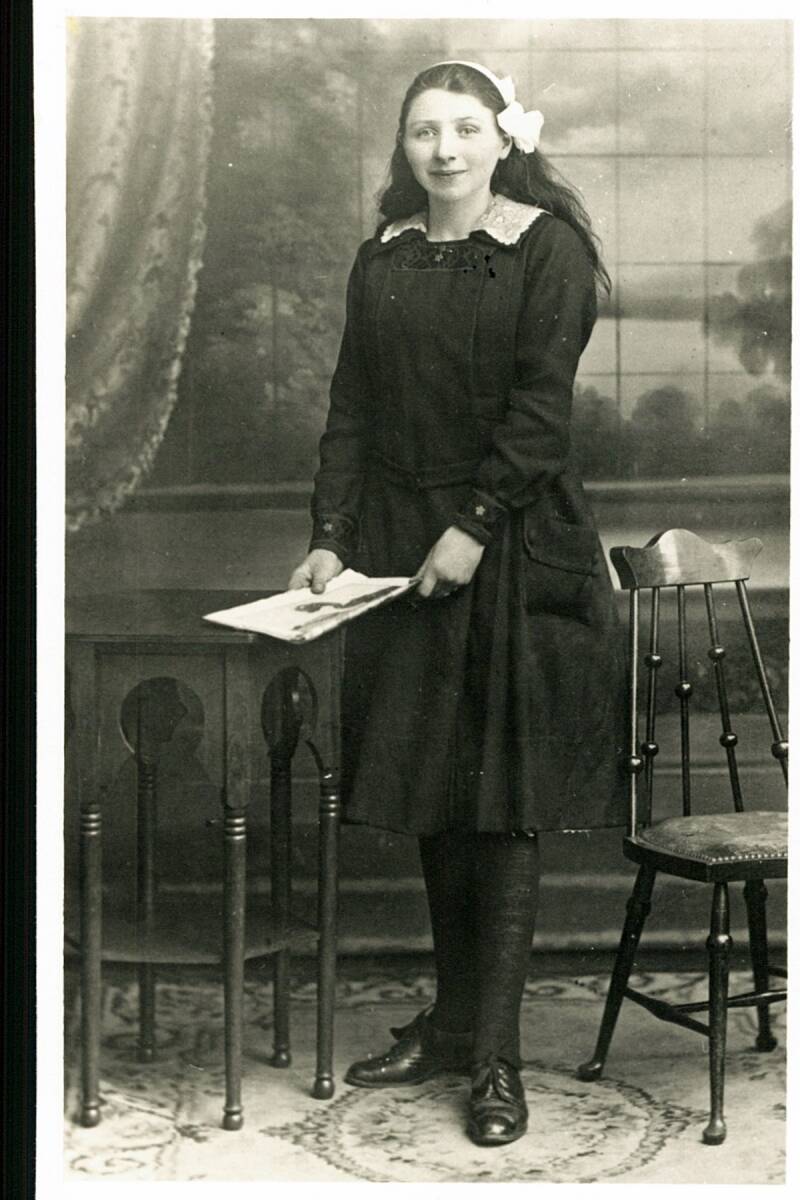
Helen at age 13 years

Picnic at the beach Scottish style

Helen early 1920's

Helen on the right c1910

Helen on left c1918
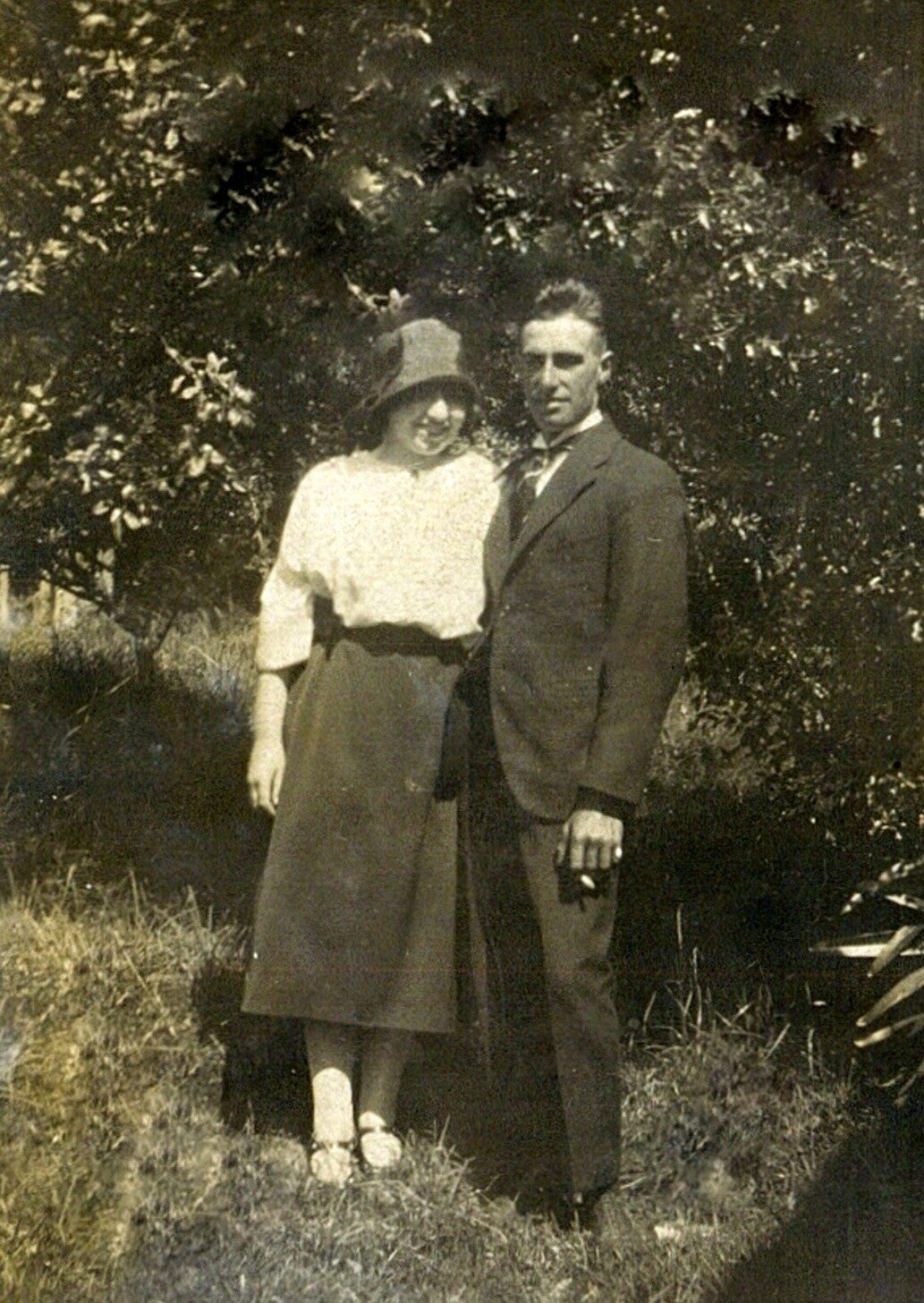
Johannes Benno John Zander
Benno was the youngest son of Elizabeth and August Zander and was born in Marton. His family were of German descent and they had come to New Zealand via South Australia.
Pastor John Zander of the Lutheran Church in Marton was granny Zanders' brother. The Zander children attended the Lutheran School on Pukepapa rd, Marton, a walking distance of three miles.
Benno was on the Power Board at the time we met and we married on 11 February 1926, my 21st birthday. I was given away by Benno's brother Ernest and married by Pastor Te Punga. We honeymooned in Whanganui.
Married life
We boarded with Mrs Guinan in Bulls to start with and I oc cupied myself with 'fancy work' while Benno worked at the Powerboard. I embroidered 'goodnight' on a pair of pillow shams which was the fashion then. I had a very happy time in the kitchen helping with the dishes etc. There were quite a few boarders and I was known as Mrs Newlywed.
We moved to Marton after work finished in Bulls. This was the start of the depression, times were hard and work hard to get. There was no social security in those days.
We had a little cottage in Bond st but as times got harder we bought a few acres of land at Greatford where Benno milked nine cows. There was also some poultry but they were only pullets not yet laying and had to be fed. Fiona, Alan and Raymond (who was only a few weeks old) were our family then.


Above image: Helen with baby Fiona
Family life in the early 1940s
We had no electricity and used an Alladin's lamp filled with kerosene for lighting. Mantles were hard to get during the war years and we had to use candles. I marvel that the place never went up in flames and I'm sure god watched over us.
We were regular attenders at the Lutheran Church in Marton, and the children attended Sunday School. I'm sure that the things they were taught at home and in Church must linger still and even if they forget, God does not forget them.
I had a wonderful friend in Mrs Heindrich, the Pastor's wife. She sewed for me and she had me to stay for a week or more after my babies were born, in fact Raymond and Noeline were born at the Manse. Noeline was born on Christmas Day and the Heindrich children were so excited that when Pastor asked the class "Who was born on Christmas Day?" Heather said, "A little baby sister."
Benno worked so hard he suffered with asthma and had two bouts of pneumonia. He was in Whanganui Hospital when I was expecting Glenys (the youngest and ninth child). Alan was a great help to me at that time, perhaps like me he was a bit hard on those who disobeyed.
As time went on and the house grew more shabby and Donald joined the Navy it was too much for Benno to work all day and come home to milk cows at all hours. He had been driving trucks at Hill's Carrying Company in Bulls. He bought a house in Bulls and renovated it beyond recognition inside and out. Our biggest thrill was to have electricity and to boil a jug and sit in the sitting room to have a cup of tea (approx 1956).
There were some happy times in Greatford. The local school's send-off for soldiers going away to World War 1, some never to return. Fiona had grown up and was very attractive. She had an American who came up on leave from Paekakariki whom she very nearly married and went away with. He lived in Burmingham, Alabama.

Image right: 1941 from back left, Benno holding , Helen, Fiona, Alan, and from left front, Benita, Noeline, Jan and Raymond.

Above image c. 1949: From left: Benno, Glenys, Benita, Noeline, Helen, Alan, Jan, Fiona and Ken Knight, with Marion in the front.
The 1950's onward
However, it wasn't to be and Alan always said he would give up his seat at the table when Fiona brought home someone that he approved of, and who better than Ken Knight whom she married.
Marion comments. The next decade through to the mid 1950's saw the gradual movement away from the family home as each one of us began a life and partnerships of our own. It was a time of gradual easing off for our parents but this period in particular saw many emotional and health related struggles, for our parents and their children. It was from this basis that we all emerged to take our turn in the world. Spanning as it does, a double decade of ages, our family members seem now to have separated and at the same time merged. Aunts and nieces/nephews are sometimes closer in age than brother's and sisters. Differing philosophies have emerged. New families have grown in differing forms. From our very uncomplicated beginnings has emerged a larger, more complex and ever changing series of families creating an interesting picture in tune with the present changes of our larger society but still linked by our parents.
I had always hoped that some of the family would one day go home to Scotland but no one ever seemed to have the money. The Grand-children are making up for it now.
Later in his life Benno had reason to say he couldn't give the children the financial help he would have liked to and Alan replied that the help he gave was to teach them to work.
We celebrated our Golden Wedding in 1976 and our family were all present. Only a few grandchildren were not there. We had a wedding service conducted by Pastor Klien and we chose as our wedding text, 'The Lord Is My Shepherd'. A piper played Amazing Grace. We had a lovely wedding breakfast at the R.S.A Hall in Bulls. The family gave us a willow pattern dinner set, similar to the one we began our married life with. (Image: Helen and Benno)


Prior to our Golden Wedding Anniversary, Benno and I spent three months in South Australia staying with and getting to know our many Australian cousins and meeting those we have had as guests.
The hospitality was wonderful and we got to know people that Granny Zander had talked about and realized how many Lutheran Churches there were over there and how easy it was for young people to meet and marry fellow Lutherans. In the past, to marry someone from another Church did not seem to meet with approval from my Lutheran in laws. As a Presbyterian this did not seem right to me, but as I learned in later years, all Lutherans are not Christians and all Christians are not Lutherans.
Above image: The family in 1976 at St Martin's Lutheran Church in Marton. There were 29 children and 12 great grand children at the time.